Part 1
The implant
A titanium post in the bone that takes the place of the root and carries the chewing load.
The Smile Professionals · Dental implants
Replace missing teeth with French Lyra ETK implants, planned digitally and placed by our Chief Doctor, Dr. Dionysios Chasiridis. One implant with its crown costs €1,200, or you can pay from €25 a month with a credit card.
The basics
A dental implant is an artificial tooth root. It is a small screw-shaped post made of medical titanium that the doctor places in the jawbone exactly where the natural root used to be. Over the following months the bone grows tightly around its surface and the implant becomes part of your jaw. Dentists call this process osseointegration.
Once the implant is firmly anchored, a crown is fixed on top of it. The crown is the visible part of the tooth: it is made individually from a 3D scan of your mouth so that its shape, size and colour match your own teeth. To you and to the people around you, it looks and works like a natural tooth: you bite an apple, chew meat and smile without thinking about it.
Today implants are the most natural way to replace a missing tooth. They do not need support from neighbouring teeth, do not move when you eat or talk, and you clean them with an ordinary toothbrush and floss.
Part 1
A titanium post in the bone that takes the place of the root and carries the chewing load.
Part 2
A small connector that joins the implant to the crown and sits at the level of the gum.
Part 3
The visible tooth, made to match the shape and shade of your natural teeth.
Why it matters
Many people put off replacing a tooth, especially if the gap is at the back and nobody sees it. But a missing tooth is not only about appearance. The longer the gap stays empty, the more the mouth changes, and the more complex and expensive treatment becomes later.
Without a root to stimulate it, the jawbone in that area gradually loses volume. Later this can mean extra bone grafting before an implant.
Teeth next to the gap start to tilt into it, and the opposite tooth can grow out of its socket. Gaps open where food gets stuck.
You start chewing on one side. The remaining teeth carry more load, wear faster and are more likely to crack.
When several teeth are missing, the bite can shift and the lower part of the face can lose support, which makes it look older.
Your options
There are three main ways to replace a missing tooth. Each has its place, and at the consultation we explain honestly which one suits your situation. Here is how they compare.
| Implant | Bridge | Removable denture | |
|---|---|---|---|
| Neighbouring teeth | Not touched | Filed down to hold the bridge | Hooks can load them |
| Jawbone | Kept under load | Shrinks under the gap | Shrinks under the gap |
| Feels like | Your own tooth | Fixed, but joined teeth | Can move, taken out at night |
| Chewing | Like natural teeth | Good | Limited with hard food |
| Cleaning | Brush and floss | Special floss under the bridge | Removed and cleaned separately |
Who it is for
Implants solve very different situations, from one lost tooth after an accident to a full fixed arch for someone who is tired of removable dentures.
One implant with one crown. The teeth on both sides stay exactly as they are, which is the main advantage over a bridge.
Depending on the gap, we place an implant for each tooth or a bridge supported by two or more implants, so you need fewer implants.
A fixed full arch of teeth on several implants instead of a removable denture. Dr. Dionysios leads our full-mouth programme personally.
If a tooth cannot be saved, we plan the implant in advance. In some cases it can be placed soon after the extraction.
Price & payment plan
The price covers the Lyra ETK implant and the crown on top of it. You can spread the cost over up to 48 months with a credit card from Bank of Cyprus, Eurobank or Alpha Bank. We check your card limit together at the clinic. The payment plan is for Cyprus residents.
The number of implants you need · whether bone grafting or a sinus lift is required · a bridge or full arch instead of single crowns. A CBCT scan, if needed, is done at an imaging centre and paid there. Everything else is written in your treatment plan before we start, so there are no surprises.
How the payment plan works →
Your implantologist
Chief Doctor, clinical director & implantologist
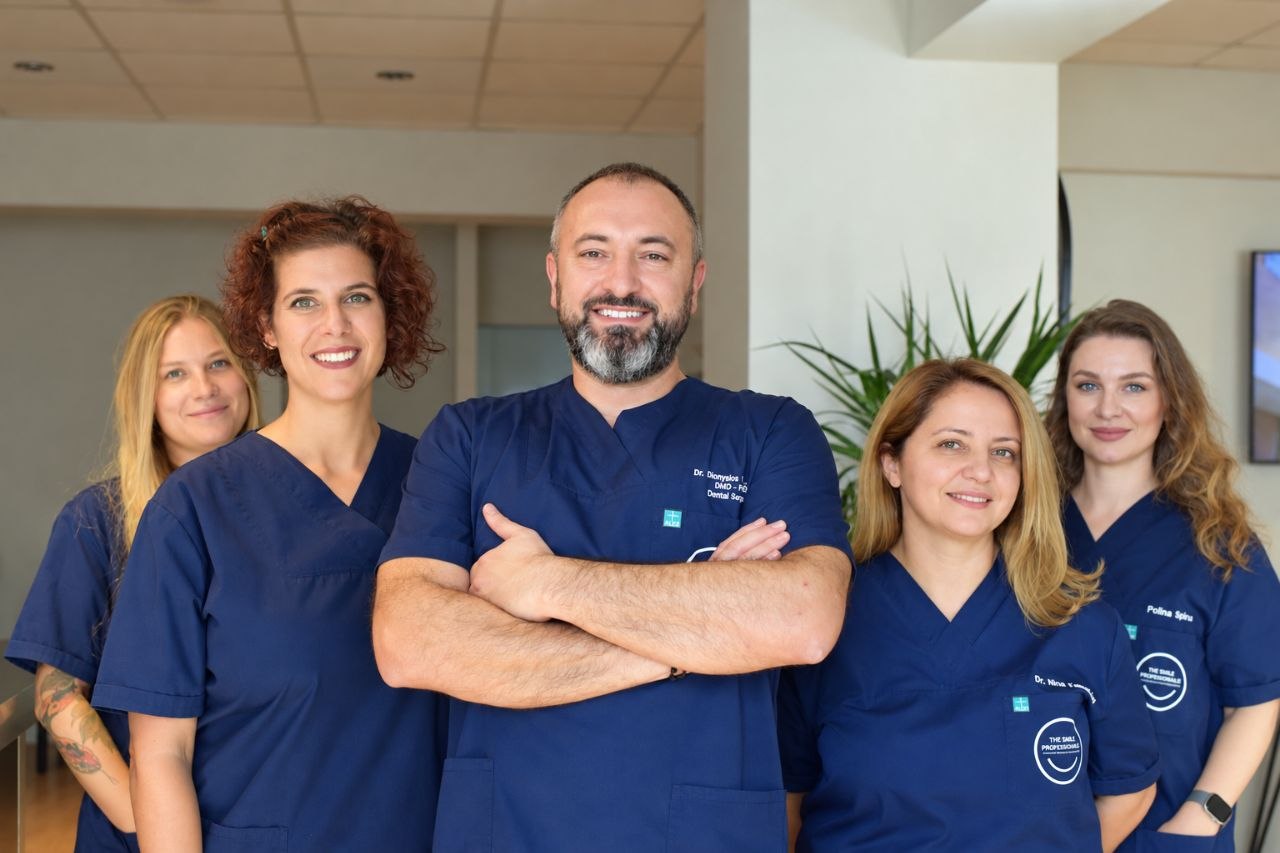
Dr. Dionysios trained at NYU College of Dentistry in New York and has been working in implantology for more than 15 years. As Chief Doctor of The Smile Professionals, he personally leads our implant and full-mouth rehabilitation programmes: from the first scan and the treatment plan to the placement of the implant and the final crown.
He is a member of the World Digital Dentistry Association and plans his cases digitally, using an intraoral 3D scan and a CBCT (3D X-ray of the jaw) to choose the exact position, angle and size of every implant before treatment begins. For complex cases this planning is what makes the result predictable.
Patients often say what they remember most is not the procedure but the conversation before it. Dr. Dionysios takes the time to explain every step, shows you your scans and answers questions until nothing is unclear. In English, Greek or Russian.
“Behind every scan and every surgery there is a real person, with their own fears and hopes.”
Dr. Dionysios Chasiridis, from his notes
Part of the implant team: Dr. Vaso Salamon Kosti. Certified in Implantology A–Z (40-hour programme), with advanced training in CBCT diagnostics and guided and freehand implant placement.
Meet the whole team →The implants we use
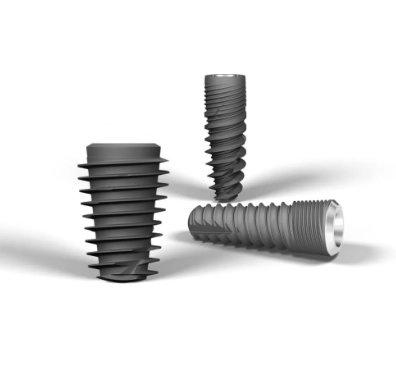
An implant stays in your jaw for many years, so the system it comes from matters as much as the hands that place it. We work with Lyra ETK, a complete French implant platform that combines a proven surgical protocol with a wide range of prosthetic parts. Every implant is manufactured to strict European medical standards and backed by long-term clinical research.
We chose Lyra ETK for three reasons: how reliably it integrates with bone, how many clinical situations it covers, and how easy it is to service in the future. Because it is a widely used system, the parts for your implant will still be available years from now if a crown ever needs replacing.
Material
Lyra implants are made of commercially pure Grade 4 titanium, the strongest grade of pure titanium used in implantology. The body accepts it very well, it does not corrode in the mouth, and it is strong enough to carry the full force of chewing.
Surface
The surface of the implant is treated to create a bioactive micro-texture. Bone cells attach to it more easily, so the implant bonds with the bone faster and more predictably. This matters most in softer bone, for example in the upper jaw, where integration is usually slower.
Design
The geometry of the thread is designed to hold firmly in the bone from the very first day. This "primary stability" protects the implant while it heals and, in suitable cases, allows a shorter path to the final tooth.
Range
The system includes implants of different lengths and diameters and a full prosthetic range: single crowns, bridges and full-arch restorations. That means we adapt the implant to your bone, not the other way round.
Authenticity
We buy Lyra ETK implants and components through Aksion Tech, the certified regional partner. You get original parts only, never copies, with full batch traceability: the exact implant placed in your jaw is recorded in your file.
Research
Lyra ETK is supported by long-term clinical studies and European quality standards, and our team receives ongoing clinical training and support from the manufacturer's partner.
Digital planning
No more uncomfortable impression trays. We scan your teeth with the Shining 3D Aoralscan intraoral scanner, which creates an exact digital model of your mouth in a few minutes. For implant planning the doctor also needs a CBCT, a 3D X-ray of the jaw. It shows the height and width of the bone, the position of nerves and sinuses, and the space available for the implant.
We do not have a CBCT machine in the clinic. If you need one, we give you a referral and you can have it done at any imaging centre that suits you, in Larnaca, Limassol or elsewhere. The scan takes a few minutes, you pay the imaging centre directly, and the images are sent to us for planning.
On this model Dr. Dionysios chooses the right implant size and plans its exact position and angle. You see your scans on the screen, so you understand what will be done and why.
Digital planning makes surgery shorter and more precise, and the crown fits better because it is designed from the same data.
How we place implants
The doctor examines your teeth and gums, reviews your health history and takes an intraoral 3D scan. If a CBCT (3D X-ray of the jaw) is needed, you get a referral to an imaging centre of your choice (paid there separately). You discuss your goals and options. The consultation costs €60.
You receive a written plan: how many implants, which type of restoration, whether any bone work is needed, the timeline and the final cost. You decide calmly, with no pressure.
If there is gum inflammation or a tooth to remove, we take care of it first. When bone volume is low, we plan bone grafting or a sinus lift.
Under local anaesthesia the doctor places the implant in the planned position. You feel pressure but not pain. Placing a single implant usually takes less time than people expect, and you go home the same day.
The implant fuses with the bone, typically over a few months. Where the front teeth are involved, you are not left without a tooth: we fit a temporary solution. Control visits make sure everything heals as planned.
We take a new scan, design the crown and fix it on the implant. We check your bite, show you how to clean around the implant and book your first check-up.
Not enough bone?
After a tooth has been missing for a long time, the bone in that area becomes thinner. In the back of the upper jaw the maxillary sinus also sits close to the gums, so there is often not enough bone height for an implant. Being told "you don't have enough bone" elsewhere does not always mean implants are impossible.
With a sinus lift, the doctor gently lifts the sinus membrane and places bone grafting material underneath. Once it heals, this new bone becomes a strong foundation for the implant. The procedure is performed under local anaesthesia, uses well-established grafting materials and is planned digitally with a 3D scan and a CBCT from the imaging centre. In other areas, bone grafting rebuilds the width or height of the jaw in a similar way.
After treatment
An implant cannot get a cavity, but the gum and bone around it need the same care as natural teeth. Good habits are what make an implant last.
Some swelling and tenderness are normal. Follow the doctor's instructions on painkillers, cold compresses and rinsing.
Soft, lukewarm food at first, chewing on the other side. Avoid alcohol and smoking while the area heals.
Brush twice a day and clean between teeth with floss or interdental brushes. We show you exactly how.
Professional cleaning and a check of the implant at your regular visits keep the gum and bone healthy for years.
Reviews
The implant is placed under local anaesthesia, so you feel pressure and vibration but not pain. Most patients say it was easier than having a tooth removed. Some swelling and tenderness for a few days afterwards is normal, and we tell you exactly how to manage it.
Next step
Dr. Dionysios examines you, takes a 3D scan and gives you a treatment plan with the final price.